
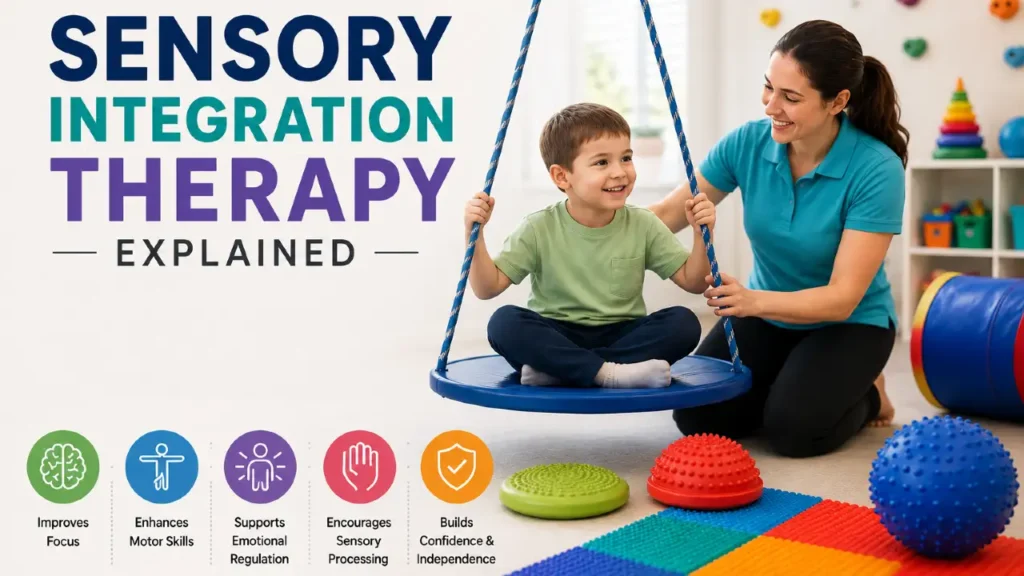
All children perceive the world using their senses. They will see, feel, hear, smell, and act in their surroundings with the brain consuming all of this information. But not every child does this easily. Some children might become overstimulated by sensory input, avoid some textures, have issues with movement or concentrate. There problems may be connected to Sensory Processing Disorder (SPD) where Sensory Integration Therapy can help significantly.
What is Sensory Integration Therapy?
Sensory Integration Therapy is a distinctive method employed by occupational therapists to assist children to respond to sensory inputs in a better way. The therapy aims at enhancing the ability of the brain to collect, categorize, and respond to sensory inputs. Childhood with sensory processing disorder might become hypersensitive to various stimuli or conversely crave each sensation. Sensory Integration Therapy is aimed at providing several efficient, well-arranged, and enjoyable activities to the nervous system to process the sensory stimuli.
Understanding Sensory Processing Disorder
Sensory processing disorder is the inability of the brain to correctly interpret and respond to sensory signals. The following are some challenges for children with Sensory Processing Disorder:
- They may be very sensitive to sounds or bright lights.
- They may avoid certain clothes and have a problem with food textures.
- They may have fine motor and balance difficulties.
- They may constantly fidget or try to find sense stimulations.
- They may find maintaining attention and focus in class difficult.
- They may have behavioral eruptions due to sensory overload.
How Sensory Integration Therapy Helps
Sensory Integration Therapy is a specific form of therapy for children that is intended to help them with their sensory processing issues by providing a safe environment. In sessions, occupational therapists choose activities that are suitable for the child’s particular sensory needs.
The goals of therapy may include:
Improving attention and concentration
Enhancing balance and coordination
Developing motor planning skills
Reducing sensory sensitivities
Increasing independence in daily activities
Supporting emotional regulation
As children learn to process sensory information more effectively, they often become more confident and comfortable in their everyday environments.
Check: Sensory Toys for Kids Learning
Common Activities for Sensory Processing Disorder
A number of different activities are utilized by specialists in SPD therapy to stimulate sensory development in a fun and entertaining manner. Below are some of these activities.
Swinging and spinning activities aim at improving balance and body awareness
Obstacle courses designed to improve coordination and motor planning
Trampoline activities for movement and proprioception
Sensory boxes containing sand, rice, or beans
Use of weighted blankets and balls
Exercises requiring climbing, crawling, and jumping to improve core strength
Some art and craft activities involving various textures
The choice of activities depends on the specific sensory profile of each child and his or her therapeutic objectives.
Shop Sensory therapy equipment online india
Conclusion:
The significance of Sensory Integration Therapy in allowing kids with Sensory Processing Disorder thrive in their everyday lives can’t be overstated. Continued sessions involving organized sensory experiences tailored to the child’s needs allow them to learn to process sensory information, complete daily activities, and acquire essential developmental abilities. Early treatment and professional intervention will result in considerable improvements.